Reviewed by Beth Wilkison, senior living expertBeth Wilkison is a manager at A Place for Mom and has worked in senior housing and health care for more than 35 years.
More info
Like everyone, seniors who have Alzheimer’s disease and other forms of dementia benefit from feeling engaged and productive. Memory care communities offer activities and entertainment to encourage social interaction, reduce anxiety, stimulate the brain, and inspire feelings of accomplishment. To engage residents with different needs and abilities, memory care communities often provide a diverse calendar of activities, including exercises, social events, creative classes, and various therapies.
Let our care assessment guide you
Our free tool provides options, advice, and next steps based on your unique situation.
Personalized activities are crucial in memory care. Both soothing and stimulating activities can improve cognitive function and reduce common dementia symptoms in memory care residents.
Memory care communities can provide diverse activities. Residents are encouraged to suggest activities like their favorite exercises, social events, and creative hobbies.
Reminiscence is a strong theme across memory care activities. Activities may incorporate familiar music, movies, foods, and scents to help with residents’ memory recall and mood.
Memory care calendars vary between communities. Talking to a senior living expert can help you find a suitable fit for a loved one with dementia.
Benefits of memory care activities
Research shows that therapeutically stimulating activities for memory care patients have many benefits in long-term care settings. For instance, it can improve cognitive function, communication skills, and promote self-worth. It can also reduce loneliness, reliance on medications, and occurrence of common dementia symptoms.[01]
“We’re providing the care [residents] need, but we’re also providing them with the engagement and opportunities they’re interested in and passionate about,” says Libbi Hash, national director of wellness and memory care programming at Kisco Senior Living.
Memory care communities even encourage residents’ families to get involved and share their loved one’s interests, abilities, and preferences if their loved one is unable to. This can help communities personalize activity plans to better accommodate each resident.
Many of the following activities can be adapted to engage dementia patients at home. However, memory care communities, care homes, and even some nursing homes provide increased support, supervision, trained professionals, and a range of proper equipment and materials to provide a larger variety of activities in a safe and social manner.
Physical activities and exercises in memory care
Physical activity is a crucial factor in improving brain health. It can help improve cognitive function, promote independence, and improve psychological health.[02] It can also reduce the risk of heart disease, stroke, type 2 diabetes, hypertension, mortality, and falls and increase a person’s overall health and longevity.
Some common physical exercises found in a memory care community include:
Walking. Many communities offer walking groups for seniors to join and walk safely on secure and supervised grounds. You can even find scheduled activities where walking is involved, like scavenger hunts and art walks.
Gardening. Gardening is a great way to restore dexterity and strength.[03] Some communities offer raised garden beds for seniors to safely continue tending to beloved plants and flowers.
Dancing. Communities may host dance classes for residents with varied mobility levels. For example, residents with low mobility are instructed to do simple movements in a chair.
Tai chi. Harvard Medical School notes that this exercise can improve cognitive function. It’s also exceptionally easy for individuals with dementia to follow its specific movements.[04]
Chair yoga. This exercise is great for those with varying mobility levels since residents do poses and stretches while seated in a chair. It helps with flexibility, strength, and blood flow.
Approximately 70% of memory care communities within A Place for Mom’s network offer a combination of some of the fitness activities listed above.[05]
Social activities for memory care residents
Cognitive impairment from a dementia diagnosis may feel isolating, resulting in anxiety, depression, and loneliness. Therefore, it’s important for seniors to socialize as it can help them feel valued and supported.[06]
Providing a healthy social environment can help seniors with dementia regain a sense of self-worth, have a more positive attitude toward life, and develop better eating and exercise habits.[06]
To help seniors socialize, memory care staff members often introduce seniors to one another based on their interests. To make introductions natural, staff often encourage residents to sit together during meals or in communal spaces like a courtyard or living area.
Common social activities include a variety of activities favored by residents of the community:
Game nights. Most communities host game nights or have game rooms to help seniors gather and engage in familiar card, tile, and board games.
Movie nights. Many communities have a theater on-site where residents’ favorite movies are showcased.
Ice cream socials. A tasty treat like ice cream can serve as a positive distraction for seniors who aren’t usually sociable. Ice cream can help seniors show enthusiasm or bring back childhood memories, making it easier to spark a conversation.
Cooking classes. Some communities help residents follow beloved family recipes to stimulate appetite and utilize aromatherapy and taste therapy. These therapies are especially beneficial because scents and flavors can elicit memory more quickly than sights and sounds. Residents can participate in various ways — they can stick to reading the recipe, observing, or solely coming to relish the finished dish.
Interest clubs or groups. Oftentimes, communities offer clubs for seniors with different interests and capabilities. Popular options include book clubs, walking groups, and gardening clubs.
Within A Place for Mom’s memory care network, over 60% of communities offer a gardening club and about 56% of communities offer cooking activities to bring residents together.[05]
Engaging activities like music lessons and arts and crafts offer a creative outlet for memory care residents, no matter their level of skill or cognitive ability. Studies show that painting, drawing, crafting, musical activities, and even browsing art styles allow freedom of expression and a chance to exercise fine motor skills.[07]
Artistic activities and crafts
Art therapy involves encouraging artistically inclined residents to express themselves using their medium of choice. Artistic expression is known to help soothe dementia symptoms and engage the brain.
Memory care communities may include the following types of arts and crafts in their programming:
Collaging and scrapbooking. Residents cut out pictures from old magazines to create a meaningful or themed collage. They can also use their personal pictures to create a memory scrapbook.
Art shows. This might consist of showing immersive video tours of art museums or slideshows of popular paintings. Some communities may even invite local artists to display their collections in an on-site gallery and allow residents to purchase pieces to hang in their rooms.
Pottery or clay projects. Residents can sculpt clay into figurines, decorations like holiday ornaments, or functional objects like pinch pots. The finished pieces might be displayed in common areas or used to decorate a resident’s room.
Painting. Residents can paint on their own in a designated art studio or as a group while following an instructor.
Within A Place for Mom’s network, nearly 75% of memory care communities offer arts and crafts activities to help residents engage their creative side.[05]
Musical activities
Music therapy for dementia involves listening to familiar music to promote reminiscence. It’s known to help enhance memory, reduce agitation, and improve cognition.[08]
To help seniors reminisce using music, memory care communities typically incorporate the following musical activities:
Playing classic records. Communities might play classics in the background during other activities like game nights or classes. Or, they may provide a jukebox or CD player with classic tunes in a common area, so residents can listen and reminisce at their leisure.
Instrumental music classes. Memory care residents can attend music lessons to learn new skills, hone old ones, and enjoy themselves. A local musician or the activities director might lead these sessions. These classes are usually designed for all skill levels to participate and include easy-to-use instruments like the triangle or maracas.
Karaoke nights or singalongs. Singing favorite songs or getting together to sing holiday carols or hymns can help promote socialization and joy among residents.
Listening to music on a portable music player. Some communities provide residents an easy-to-use music player, like an iPod, loaded with their favorite songs. This allows residents to listen to their tunes whenever they’d like. Oftentimes, family members are involved in suggesting their loved one’s favorite musicians or songs.
Nearly 79% of memory care communities within A Place for Mom’s network offer some combination of the musical activities listed above.[05]
Is memory care the right fit?
Let our free assessment guide you to the best senior living options, tailored to your needs.
Productive and meaningful activities
“Everyone has a need to feel useful, no matter what stage of life they’re in,” Hash says.
Activities that help residents reflect and feel productive are crucial in memory care. While productive activities may look different in each community, some of the most common include engaging in life skill stations and daily tasks.
Life skill stations
Since many older adults with dementia mentally revert to a time when they were younger, memory care communities aim to simulate common settings from residents’ pasts. These replications are called autonomous engagement stations — or life skill stations — and they aim to provide a familiar environment for residents to feel safe and reflect.
“If a resident is restless at night and wants to get up, the autonomous areas are a safe setting where they can go and engage in an activity that brings them comfort or a sense of satisfaction,” Hash says.
Life skills stations are built around a specific task or occupation, such as:
Office work. Residents can sit at a desk stocked with props like a typewriter, phone, notepads, calculator, and stamps.
Tinkering. A resident who worked in a skilled trade or enjoyed do-it-yourself home improvement projects might benefit from a simulated workshop setting with blunt tools, smooth wood, and toolboxes.
Childcare. Nurturing dolls increases engagement and communication and reduces symptoms of distress in people with dementia.[09] This station might feature dolls, a crib, bottles, and baby clothes to fold.
Pet care. Communities may offer realistic robotic cats or dogs for residents to care for. Interaction with robotic pets has been shown to have similar benefits to therapy with live pets.
Daily tasks
Staff at memory care communities create opportunities for those with dementia to continue to be productive in ways that give them meaning and joy. This approach is sometimes called the Montessori Method or life skills engagement. It involves helping seniors revive skills and interests — even if physical abilities have deteriorated from dementia — rather than redirecting them to easier tasks.
Memory care calendars may include various life skills tasks to help residents feel accomplished and motivated. Examples could include some of the following everyday activities:
Helping others. Residents can help the kitchen staff out by washing vegetables or buttering bread. Or, maybe they could deliver mail to other residents.
Cleaning. Sweeping up hallways or wiping tables keeps their shared environment clean.
Setting the table. Making centerpieces for tables in the dining room or setting out the plates can be a satisfying activity for some residents.
Creating something to donate. Some communities may host activities where residents knit, crochet, quilt, or sew items to donate to local organizations, like homeless shelters, hospitals, or animal shelters.
Watering plants. Many memory care communities have plants in shared spaces or courtyards to liven up the environment. Residents can help care for the plants by watering them occasionally.
Stimulating activities for memory care residents
After a dementia diagnosis, it becomes crucial to identify brain-stimulating activities that work for each unique individual. To engage different parts of the brain in various ways, memory care communities use a variety of cognitive and tactile activities.
Stimulating memory games
Cognitive stimulation therapy is an evidence-based treatment used in people with mild to moderate dementia.[10] Its goal is to guide people with dementia through a series of themed activities — like memory games — to promote continued learning and improve working memory. Common activities include things like the following:
Jigsaw puzzles. Putting together colorful puzzle pieces can improve visual-spatial reasoning and problem-solving skills in dementia patients.
Word search puzzles. This familiar activity can provide comfort and help exercise residents’ brains.
Maze games. Following a maze can help improve fine motor skills and hand-eye coordination in memory care residents.
Card-matching games. Matching shapes, colors, or numbers can help with memory recall and concentration.
Dice games. Rolling die can help improve fine motor skills, increase attention span, and help them practice counting.
Bingo. This senior-favored game can help memory care residents socialize while promoting their listening skills and hand-eye coordination.
Within A Place for Mom’s memory care network, over 55% of communities offer specific brain fitness activities and exercises to help seniors improve cognitive function.[05]
Tactile stimulation activities
The sense of touch can help memory care residents feel joyful and secure, which can in turn soothe some common dementia symptoms.[01] Communities use tactile stimulation in a variety of ways:
Sensory bins. These boxes are typically filled with items of different sizes, shapes, materials, and textures designed to provide tactile stimulation. Each bin’s contents may be based on a theme, such as a holiday, a season, a color, or a location.
Play a guessing game. Encouraging residents to close their eyes and identify an object, like a stuffed bear or wooden spoon, by touch can be fun and engaging.
Sort different fabrics. Collecting samples of fabrics like velvet, fur, or silk to sort can be soothing for memory care residents.
Play with fidgets. Providing a fidget toy or board with knobs, zippers, and unique textures can help keep hands busy and calm dementia patients.
Holiday celebrations in memory care
Celebrating common holidays — and some lesser-known ones like National Flower Day is one way memory care facilities foster community. It can add excitement and variety for residents who don’t get to celebrate holidays the same way they used to.
To help residents feel included and joyous during mainstream holidays, many memory care communities host fun activities:
Decorating the community. Community staff put up decorations and sometimes allow residents to contribute to spark memories and help them anticipate the upcoming holiday.
Holiday parties. On holidays like Valentine’s Day, Halloween, and Christmas, many communities host parties with themed decorations and snacks to encourage socialization and bring festivities to life. Many communities allow visitors to some events so loved ones can celebrate together.
Themed activities. Oftentimes, communities will add holiday-related variations to common activities. For instance, a Christmas-themed scavenger hunt or a Halloween-themed bingo night.
Nontraditional holiday activities. Nowadays, unique holidays, like National Coffee Day or National Watermelon Day, are more popularly celebrated. Communities often incorporate unique tastings or social events to freshen up the calendar.
Over 80% of memory care communities within A Place for Mom’s network host holiday parties and celebrations for residents.[05]
Memory care questions? Get expert help
Tell us your care needs to receive personalized guidance from our advisors.
Pet therapy activities
Oftentimes, memory care communities bring in pets and host unique activities to engage and calm residents. For example, a holiday like National Pet Day provides an excellent way to incorporate pet therapy. Also known as animal-assisted therapy, it’s known to decrease loneliness and agitation, and promote pleasure, relaxation, and better health habits.[11]
While some memory care facilities have a community pet, it’s more common for therapy dogs or cats to visit from a contracted company. Here are some ways a community may incorporate pet therapy activities:
Petting animals. Staff may help less able residents stroke the soft fur of a cat or dog.
Viewing colorful fish tanks. Communities may unveil tanks of colorful fish for visual stimulation.
Feeding a bird. Bringing in an engaging bird, like a parrot, could help residents feel involved. Or, residents could make a bird feeder for birdwatching.
Reminiscence activities with loved ones
To help residents stay connected to their loved ones and their cherished memories, memory care communities often use reminiscence therapy. Communities sometimes encourage family members and friends to come visit and participate in these events:
Creating memory boxes. Memory box therapy can be soothing and therapeutic to seniors experiencing dementia, as it helps them reminisce and start conversations with ease. Visiting family members can bring items that are cherished by their loved one. Items may include something like a photo album, an item of clothing, treasured knickknacks, an audio recording, or scented wax.
Engaging in video therapy. Video therapy helps engage seniors’ brains through faces, shapes, colors, and sounds. It can help transport seniors with dementia to favorite places and memories. To engage residents, communities may ask residents’ loved ones to compile beloved home videos, come watch well-loved TV shows with them, or have them create a video message to help with memory recall.
Enjoying meals together. Some memory care communities allow visiting family and friends to join their loved one with dementia for meals, especially around the holidays. Eating together can help memory care residents remember shared meals at home. Family members may even bring their loved one’s favorite dish, which can help spark memories and conversation.[12]
Within A Place for Mom’s memory care network, over 55% of communities offer dedicated reminiscence programs with activities like memory box therapy, music therapy, and more.
Technological activities in memory care
Engaging technology can slow cognitive decline and improve well-being in seniors with dementia.[13] Technology can also help memory care communities appeal to residents’ individual histories and interests.
Below are three stimulating technologies that memory care communities use to engage seniors with dementia:
Watching live streams or immersive tours. With internet and virtual tours, memory care residents can visit zoos, aquariums, and museums around the world. A group of birdwatchers could enjoy the soothing bird calls of a wildlife preserve, while art lovers may be stimulated by a group “tour” of the Louvre in Paris. Communities may even augment these virtual experiences with props, like binoculars for birdwatchers or a map to simulate museum tours.
Participating in virtual reality (VR). VR technology can help people with dementia recall past memories, reduce aggression, and improve interactions with caregivers.[14] Many tech-forward memory care communities incorporate VR devices to help residents “visit” favorite places, like the beach or mountains, safely.
Engaging with Snoezelen rooms. Seniors experiencing significant cognitive decline may not be able to participate in activities they enjoyed during the early stages of dementia. Snoezelen rooms use technology to fill a room with sensory stimulants. Common features include projections, aromatherapy devices, sound machines, and light features to help residents fully immerse themselves.
Playing video games. Some communities offer soothing and engaging video games — like Wii Sports, Candy Crush, or Tetris — to stimulate memory care residents. Video games are proven to improve cognitive health in older adults because of the engagement and memory recall required while playing.[15]
How memory care communities personalize activities
Person-centered care for dementia uses personal histories, stories, and interests to help residents thrive in memory care communities. This approach is important when curating memory care programming ideas to help personalize activities based on unique personalities.
“When a new resident moves in, we learn their likes, dislikes, and interests. We create activities and encourage participation based on those passions,” Hash says. “As residents transition through their journey and aren’t as capable, we can modify what they’re doing so they’re still able to participate.”
By understanding preferences, pasts, and emotional needs, a community can design activities to best fit each resident’s personality, interests, and abilities. Memory care communities consider the group of residents, in addition to individual interests, to create their monthly activities calendar.
“As our resident population changes, so do our autonomous stations, the activities we plan, and even the hours we do things,” Hash explains.
There are many ways community activities and schedules may vary by resident population:
Rural communities may offer activities like canning and vegetable gardening that might not be as popular in large cities.
Communities with many religious residents may offer more frequent services, devotions, and religious studies throughout the week.
Facilities with residents who worked overnight shifts when they were younger may offer select activities throughout the night.
Autonomous engagement stations can reflect popular local jobs and settings — if many residents were employed by a local store, for example, there could be a simulated environment with a faux cash register or shelves filled with artificial products.
Memory care activities calendar
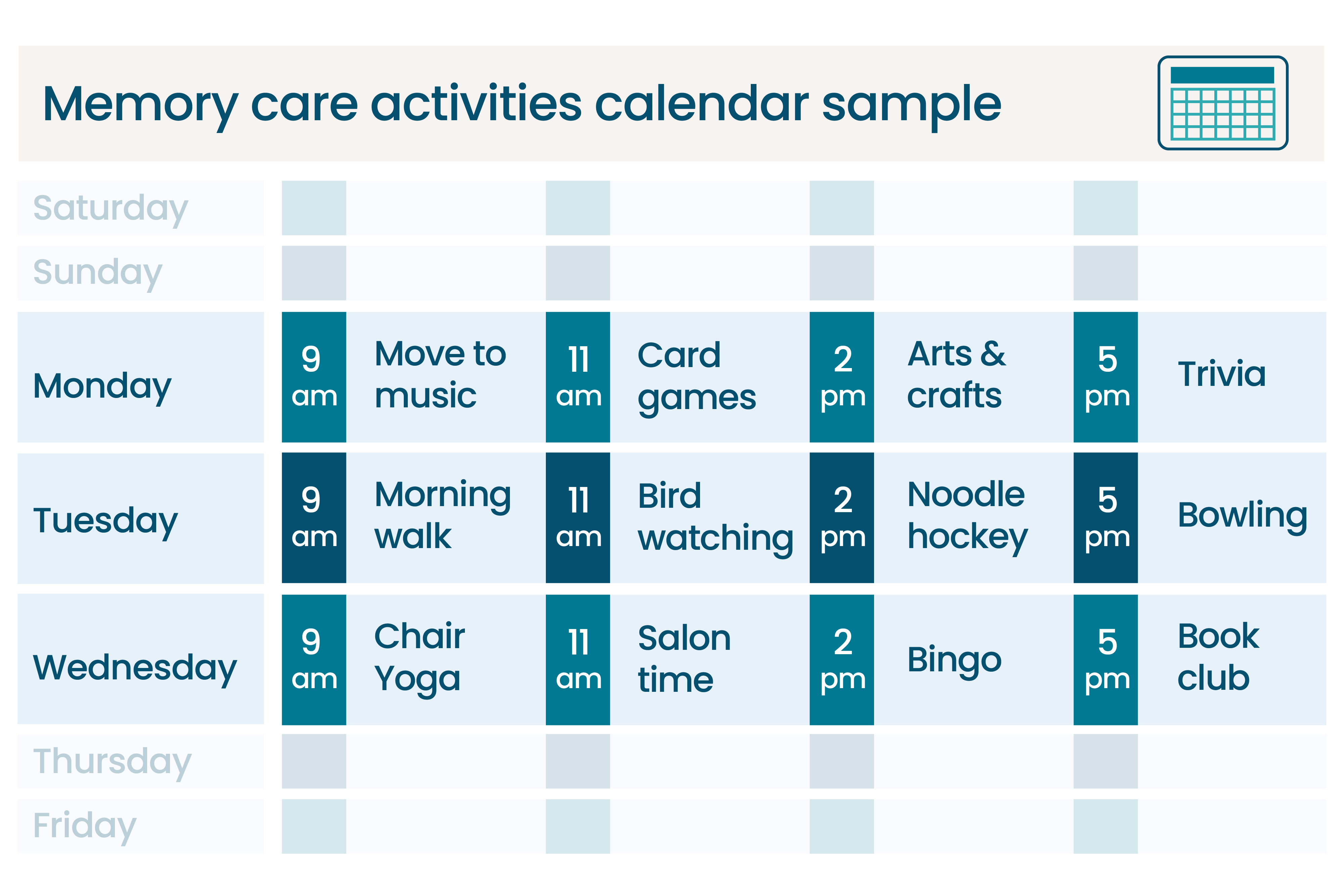
Before moving a loved one into memory care, it’s important to get a sense of the activities offered to residents. When touring, ask for the community’s memory care activities calendar. It should include all the activities offered by staff each month, along with the specific times your loved one can expect to participate. Families should also ask how easily their loved one’s interests and hobbies might be able to be incorporated into the monthly schedule.
Here’s a sample memory care activities calendar:
Get help with finding a memory care community
Many families choose a memory care facility based on its robust memory care activity programming. To learn more about local memory care options, including prices and activities, contact one of A Place for Mom’s local Senior Living Advisors. Their guidance comes at no cost to you. Together, they’ve helped hundreds of thousands of families find senior living for their loved ones.
Lai, N. M., Chang, S. M. W., Ng, S. S., Stanaway, F., Tan, S. L., & Chaiyakunapruk. (2019, January 14). Animal-assisted therapy for dementia. Cochrane Library.
Astell, A. J., Bouranis, N., Hoey, J., Lindauer, A., Mihailidis, A., Nugent, C., & Robillard, J. M. (2019, June 27). Technology and dementia: The future is now. Journal of Dementia and Cognitive Disorders.
Nirali Desai is a senior copywriter at A Place for Mom specializing in memory care and life enrichment topics. Previously, she worked in marketing and social media, edited a regional senior magazine, and wrote for the American Red Cross. She holds a bachelor's degree in journalism from the University of Kansas.
Edited by
Marlena Gates
Reviewed by
Beth Wilkison, senior living expert
The information contained on this page is for informational purposes only and is not intended to constitute medical, legal or financial advice or create a professional relationship between A Place for Mom and the reader. Always seek the advice of your health care provider, attorney or financial advisor with respect to any particular matter, and do not act or refrain from acting on the basis of anything you have read on this site. Links to third-party websites are only for the convenience of the reader; A Place for Mom does not endorse the contents of the third-party sites.